
thefleet_mods ☼ (![[personal profile]](https://www.dreamwidth.org/img/silk/identity/user.png) thefleet_mods) wrote2014-07-04 08:39 pm
thefleet_mods) wrote2014-07-04 08:39 pm
thefleet_mods) wrote2014-07-04 08:39 pm


Entry tags:
THE OWMI
✦ THE OWMI PEOPLE ✦ |
|||||||||||||||||||||||||
Here. Here. They are coming. |
... We have trained them to think of the Future as a promised land which favored heroes attain ... |
||||||||||||||||||||||||
The Owmi are the sentient aliens that populate the setting of the game. They are one of the four sects of an alien humanoid species known as the Ibere. They currently inhabit a flotilla of space-faring vessels and travel the known galaxies looking for the other sects of the Ibere people (the other sects being: the Afee, the Viire, and the Leayi). Their religion centers around the Owm Orakalla, and they are usually thought of as being curious and driven by discovery. Most of the NPCs at the moment are Owmi. The Owmi language is unique, as can be seen in the various names and words that do not translate directly to other beings’ native languages. While it is not poetic, it is at least descriptive. A society that focuses on the acquisition of knowledge needs to be varied enough to describe exactly what it is an individual is studying. This language is a derivative of the Ibere language, evolved over time, as languages are wont to do. However, some words have remained the same over time, such as: Orakalla, Gara, Owm(i), Lea(yi), Afe(e), and Vii(re). Keep in mind that the garas allow all characters to understand one another. So while an Owmi might be speaking or writing in their own language, an individual from Earth who speaks English will hear and see words (mostly) in English. The Ibere are are humanoid, and look mostly human (one head, two arms, two hands with five fingers each, two legs, two feet with ten toes each), but more ethereal. Their physiology grants them what is best described as an elemental quality – the Owmi's bodies, specifically, sometimes appear to shimmer as if composed of rippling liquid. The movements have a very fluid quality to them and when they walk they can appear to move like liquid flowing through te space in which they are traveling. Though, they can also move more like humans. Physically they are of the similar average height, weight, and strength as average humans. Age expectancy is longer than humans, however; the Owmi live an average of 200 standard years, though some have been known to live to 250 standard years of age. Every Owmi has a primary gara affiliated with the Owm Orakalla - which means their primary garas are always blue and/or green (or any color that falls on the gradient between the two). Many Owmi also have secondary and tirtiary gara affiliated with other Orakallas. The reason for this is that gara affiliation is genetic, with the primary gara passed matrilineally. As far as skin, hair, and eye color, they exhibit the same range of coloration in all categories that humans do. Eye colors of blues and greens (and gradients in between) tend to be most common and more vibrantly pigmented. But, they do not consider skin color (or hair color or eye color) to be racially divisive characteristics. They do, however, have prejudices regarding Garas (though, of course, some think prejudices are wrong, but stereotypes abound in the Owmi society). These ideas are completely unfounded and untrue, but the Owmi believe: that people with Vii Garas (red, orange, and/or yellow garas) are passionate but hot tempered and maybe irrational, making them difficult to work with; that people with Lea Gara (purple, brown, and/or black garas) are hardworking but perhaps not too bright, making them frustrating to work with; and that people with Afe Garas (white, silver, and/or gray garas) are clever but probably untrustworthy and underhanded, making them a poor choice to do business with. These beliefs can become quite dangerous. The current population of the Owmi Fleet is more than 250 million. Health is also a serious matter to the Owmi. An outbreak aboard a ship can spell deadly consequences to society as a whole. Confined spaces and recycled air exacerbate illnesses. Because of this, quality healthcare is a service provided to everyone. Vaccines are mandatory and treatments are readily available when necessary. The Owmi government goes to great lengths to educate the population about their health and health procedures. An informed population is a healthy population (see the STD PSAs talked about below.) Because of the nature of their living situation, some health requirements are mandatory, like vaccines (for all but those who cannot take them for health reasons) or seaking treatement for an infectious or transmittable disease. For this reason, sick days are availale to all workers to be used without consequence so that the spread of the disease can be contained. Those who fight against these mandates face the consequence of enfourced quarentine. Community wellfare trumps individual beliefs; though, there are no prohibitions against medical treatment in the Owmi faith, in fact, their belief system reinforces trusting medical opinion. As for outsiders visiting the Owmi fleet, they are required to meet a rigorous medical standard before being allowed onto Owmi ships. Which is why characters are checked for contaigous diseases and innoculated first thing when they arrive. The Owmi might look humanoid, but their societal structures can be quite different from what one would find on Earth. Sexuality ✦ Sexual ✦ Assexual ✦ Gradient (somewhere between Sexual and Assexual) The Owmi understanding of sexuality is far more complex than this, howerver. Within each category, the Owmi utilize countless descriptors (too many to list here) to help further explain their own identity (what we on Earth might call heterosexual, homosexual, bisexual, pansexual, etc.) If Earth's many social-cultural systems of defining sexuality were explained to the Owmi, the Owmi would find it strange and stifling. Gender Owmi take population stability very seriously. Since they are the last known Ibere, they must propagate their species. They are also interested in ensuring their scientific pursuits are carried forward into future generations. However, they also understand they have limited resources, being a society based inside space-faring vessels. So procreation is not pushed as an imperative, but instead as a serious undertaking you engage in only when ready. Upon birth, every Owmi is implanted with a device that regulates conception, even though Owmi must, like humans, go through puberty before they can get pregnant. When an Owmi wishes to use their genetic matrial to procreate, this device can be switched to assist with that, rather than prevent it. But it should be recognized that this device makes procreation an affirmative choice an individual must make. This may come across as cold and too passionless, but the Owmi find that it balanaces their needs and limitations quite well. The family unit is based on the needs of the children rather than consisting of an arbitrary set of relatives. The decision to procreate is not necessarily based on romantic relationships; though, family units can be comprised of romantic pairings - if that's what the parents choose. Usually all parents involved prefer to work while raising children, so daycare for children too young to enter primary education is provided to families that need it, along with generous parental leave for parents with new infants. The children are the future and the Owmi are invested in ensuring that future. Sex and sexuality are devoid of morality in Owmi society – terms like ‘slut’ and ‘prude’ and ‘purity’ in relation to virginity don’t make sense to them. Thorough biological and sexual education begins at an early age (though, obviously scaled for age-appropriateness based mostly on an individual's ability to comprehend the level of complexity of the subject presented to them). Their approach to STD control is somewhat peculiar, with it being notably upbeat. PSAs for STD screening and vaccines are played over public media outlets often and they are usually positive and cheerful (and sometimes very descriptive). Owmi are not necessarily monogamous; though some are, based on personal preference. They tend to be very open and up front about their preferences because they like to control for as many variables as possible, viewing dating similar to scientific experimentation. 'Family' is a concept the Owmi do understand, but as can be deduced from the information above, 'family' is not just a term applied to biological relations. 'Family' is an idea individual Owmi decide for themselves, and in fact, sometimes 'family' for one Owmi might not include biological relations at all. Societally defined gender roles are not present in the Owmi structure of family and reproduction. Though they recognize a spectrum of genders and sexes (as outlined above), they are not a gender or sex segregated society. Certain professions are limited by physical requirements, but not by gender or sex delineations. While certain sexual organs are necessary for gestation, the individual who gestates the offspring to term is not socially required to stay home indefinitely to raise the offspring - they might not be involved in raising the offspring at all. The Owmi are curious and driven by the acquisition of knowledge. Learning about anything is usually their favorite pursuit. Though, this does not mean they are an unvaried people, they just approach their hobbies, professions, relationships, environment, and their reactions to their environment with an eye towards discovery. They are generally pragmatic, realistic, and analytical. However, they do not reject their emotions; they view them as a biological response to stimuli that should be analyzed and understood. But they are driven to figure out the answer to the question of why. While they prefer to learn and discover, they understand life requires certain sacrifice and overhead. Without meeting their societal and individual needs, they cannot pursue discovery. They have a peculiar compulsory community service/personal profession system. Everyone who is able devotes time each week towards a community service. The rest of their time is split between professional pursuits or educational interests and their personal lives. In exchange, they are provided nutritious food, adequate shelter, healthcare, primary and secondary education, and a stable society. The Owmi take the welfare of their community seriously and doing anything that threatens the vitality and health of their community is frowned upon. Like shirking community service, that is a very bad social faux-pas. The Owmi are an extremely industrious society. They have found ways to address the needs of the population while allowing everyone the oportunity to pursue a profession they enjoy. Community Service Community Service usually consists of anything that is a social maintenance: janitorial jobs, public works, processing and distribution, public transportation assistance, harvesting, waste disposal and recycling. The less desirable and/or dangerous tasks are incentivized so that people will do them. (Perks are extra time on pleasure ship and increased pay (hazard pay, super boring pay, etc.)). To better help everyone give back to the community, a government organization has been set up to help people find community service work that fits them. This organization does it's best to find community service that works best with an individual's professional work schedule (ex: they do community service on the same ship and section they live or work professionally. This same organization also issues exemptions from community service to those who are incapable of doing any kind of community service (the young, the very old, the infirm and disabled can get an exception.) It should be noted that 'Community Service' is a rough translation and isn't exactly analogous to what American's think of as 'community service'. In Owmi society, this is work that is still paid (unless it is part of a criminal's punishment). It is not volunteer, non-paid work. An interesting social phenomenon is what is called 'Community Service sabbaticals' - some Owmi, after years of hard professional dedication, will take a few months to a few years off of professional work and only work community service hours. The belief is that it gives the person on sabbatical a new perspective on their work. Often, those on Comminity Service sabbatical will usually seek out community service that is completely different from what they'd previously been doing. Professional Jobs Certainly, some individuals live unstructured lives and don’t contribute much beyond their community service. These individuals are never denied the necessities of life, but the Owmi do have a monetary system for compensation for their professional work, and without being gainfully employed, these individuals do miss out on the perks money can purchase. But to each their own. While some Owmi might choose this kind of life, most Owmi see this employment structure as a boon, and most Owmi are gainfully employed. The standard shift duration is 6 hours. And a standard work week (one seven day period) includes 2 shifts of community service and 3 to 4 shifts at a chosen profession. Workaholics might work 5 to 6 (maybe even 7!) shifts a week at their chosen profession. Days off are a thing, usually a standard work week will include two days off completely, but there are no set 'weekends' to the Owmi calendar. Each individual Owmi works out their own work week schedules. The Owmi's economy is healthy and thriving. Along with community service, most Owmi are employed, and trade and commerce within the community is steady. They do use a monetary and banking system - they refer to their money as Oweos, which best translates as 'credits'. When the flotilla moves to a location, if they do not have a pressing need for a natural resource, which would be addressed first, they try to stop within easy jumping distance of sectors populated enough for trade. They are usually able to find a system open to outside trade when they look, and their crafts are usually well taken. As can be guess already, the Owmi are community-oriented and think first of community needs and then those of individuals, however, they believe a strong community starts with addressing the needs of those who are most vulnerable. They are what some might call socialists. They do not support systems or laws that create glaring wealth disparities; and because such, the weathiest pay the highest taxes, and the laws are usually written to protect the rights of the workers. There were a number of dark years at the start of their journey when they were working out a good balance for their society, and they learned that without a strong, healthy, well-cared for workforce their whole civilization crumbles. Owmi art and entertainment tend to emphasize technical perfection rather than expression of emotion. For example: Photorealistic painting, poetry focused on adherence to rhythm patterns, documentaries, dance that showcases technical profection and the achievement of body forms, music that incorporates mathematic principles. Depictions of fictitious stories tend to get bogged down in the minutia of reality – to the Owmi, this is golden as it is portraying an as-real-as-possible representation of life. But to someone raised with the basic model of rising action and suspense building for story-telling, this probably appears as boring as hell. (The Owmi wouldn’t understand the human preoccupation with spoilers or why one shouldn’t reveal them.) As for games, cerebreal games and anything with real strategy are most desired, games with chance aren't as popular. Games that are similiar to The Sims or Chess are quite popular with the Owmi. For professional or community service, the Owmi are very practical in their clothing choices. Almost every community service and profession uses uniforms. Uniforms are chosen based on their functionality with the task at hand. In their personal lives, the Owmi prefer clothing that accentuates their physiology, and the way they move like flowing water. In their leisure time, all genders wear loose, flowy clothing that highlights their garas and movement – dresses, tunics, trousers, etc. are usually made from silky and loose fabrics. Jewelry is about accenting Gara. But shoes are always practical. It doesn't make sense to not have practical shoes. The Owmi would be baffled by high heels. Focused so much on learning and discovery, the Owmi are an impressively technologically advanced society. The Ibere were quite advanced (a full interstellar-faring civilization already, spanning over a whole sector of their galaxy) and the Owmi never turned their back on this part of their heritage. At first glance, their most notable technology is their ships. They have designed and perfected a great number of ships for everything they need to be a self-sustaining civilization (you can find out more about their Military Ships HERE, Civilian Ships HERE, and the Habitat Ship HERE). But their ships are not their only technological marvels. Monitoring Nanobots Every ship is teeming with nanobots, in both the water and air. Their primary functions are to monitor the ships environment for stability, they check the air for oxygen content and breathability, and they check the population for diseases, infections, vital statistics, and over time track health treads. They are constantly compiling and relaying the information to data centers. They are less advanced than their cousins (Treatment Nanobots) and they have a very limited programmable memory. Their purpose is solely to record specific data and to relay that data back to data centers. They cannot be reprogrammed to turn on the population or to be used as a weapon – they lack the processing power and memory to do that. They are also perfectly healthy to breath/drink, and will not cause any allergic reactions. Treatment Nanobots These nanobots are very advanced and used for medical grade diagnostics and treatments. They are also used in vaccines, antibiotics, pain management medication, and basically anything we use pills for, the Owmi have found a way to incorporate nanobots. Nanobot patches – These patches are much like bandaids with Neosporin – instead of Neosporin, however, the patch is coated in the nanobot serum that speeds up healing and fights infection. The patch is used for cuts and burns. Nanobot injections/pills – Injections or pills are used for conditions, injuries, or other medical needs requiring more than a patch, but do not pose an immediate risk of death to the patient (meaning they can be treated over time and/or with multiple injections.) They fight infection and speed up healing for chronic conditions or temporary conditions. Nanobot bath – The bath is used for cases that are severe and where there is an immediate risk of death. Patient will be submerged in a bath of nanobots and remain there until the patient has healed enough to be treated successfully with injections or patches. Non-Nanobot medical technology Sometimes the conveyance serum used for medical nanobots isn't always available (this is usually not a concern, but one must plan for all eventualities), which means other medical remedies must be readily on hand to effectively treat individuals in such instances. So doctors are also trained in what we would think of as more traditional medical practices of Earth. These methods are just as effective as the nanobots, but more involving and time consuming. The medical sciences of the Owmi include scanning technology for diagnostics and many effective treatments for various diseases that don't involve the use of nanobots. Passivity Chips One of the Owmi’s method of crime control is the Passivity Chip. It is an organic based implant that controls violent impulses in a person’s brain and prevents a person from being violent. It is an effective measure of crime control. The Owmi are advanced enough to program the chip to distinguish when an individual is acting in self-defense. This feature can be turned off for the repeat offenders. Implants As mentioned above with regards to birthcontrol, the Owmi do utilize implants for various medical purposes. Sometimes this is a more precise way to monitor an individuals health. Sometimes they are used to correct a medical problem. And sometimes, implants are not medical in nature, but used to assist an individual with some facet of their life. Some professions require implants, most notably those who utilize avatars to complete tasks. It should be noted that the Owmi implants are generally subcutaneous, with very little protruding to the serface, if at all. They do not make the wearer look like the Borg. Just as our society is saturated with personal electronics that are so commonplace that they are hardly noticed, so too is the Owmi society. They have all kinds of personal electronics and gadgets and devices. For every everyday need, there is a device made to be used for that need. However, they are considerably more advanced than ours. Computers The Owmi natrually have personal computers. They range in size from ring-sized to handheld devices to desk-top models. They utilize both transparent hard-screen, touch-screen technology and holographic technology. They can do pretty much everything our fastest computers can do – but far more advanced.
The Owmi have so many different bits of technology that pop up in everyday life, and this tech is so much a part of their daily life, it almost doesn't occure to them that this is advanced technology. Here are some random examples.
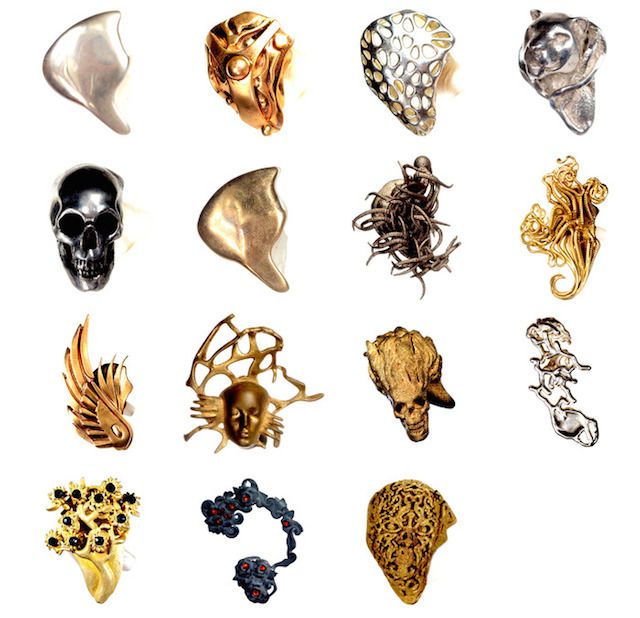
Conveyance Technology Each ship has a lift system (elevators and escalators) that transports individuals from deck to deck and/or from bow to stern and/or from port to starboard (the complexity of the system depends entirely on the ship’s size and needs). Very large ships may have transport corridors – think roads – that allow single or multi-car vehicles access to various parts of the ship. The Habitat Station has both a very complex lift system and transport corridors, it even has causeways designated specifically for personal vehicles. (Where wheeled vehicles can be used.) Owmi vehicles are based off of repulsion lift technology and do not have wheels. So most of the thoroughfares of the ships are not designed to handle wheeled transportation. Space-faring vehicles are not permitted in the inner ship transport corridors – anyone who tries to take a space-faring vehicle into these transport corridors will be ticketed. Weapons are a sticky subject for the Owmi. They recognize self-defense is sometimes necessary, so they allow weapons for those purpose. But all weapons are highly regulated. Despite not being an offensive military, the Owmi will put up a good fight if they are attacked. Man to Man The Owmi have a strict regulation (to almost prohibition) on hand weapons that can puncture hulls. However, weapons such as knives, brass knuckles, swords, etc. are permitted (if still regulated and require registration to own.) Projectile hand weapons and laser hand weapons require a rigorous registration process in order for anyone to permanently own such weapons (yearly registration, annual safety classes and certification, annual mental health evaluation). Also, these weapons cannot be brandished in public and for the most part, can only be used in a facility set up for practicing said weapons (the gym in the character’s Residential Community is one such place. These gyms are reinforced with magnetic shielding to further prevent hull-breach accidents.) Temporary permits for visiting outsiders can be obtained for a price and are quickly revoked should the weapon be used illegally. Chipped Owmi (meaning they have the passivity chip in their head for committing a crime) are prohibited from owning or using a weapon. Owmi police primarily use sonic weapons that disorient and knock-out targets. Less often they use stun rods, but only in cases where a sonic weapon is not enough. They try to avoid using deadly weapons. Weapons are highly regulated in Owmi culture. Weapons must be registered with annual renewal of responsibility. For being very against offensive attacks, the military personnel have awesome standard issue laser blasters that they wear when on-duty. Ship to Ship Many of the Owmi ships have weapons to defend themselves or for offensive purposes. Missile weapons – These are projectiles with an explosive charge, and will detonate on impact. Larger ships generally carry some missiles. All military ships carry an armament of missiles of some kind, with the size of that armament increasing with the size of the ship. They are generally used to cause massive damage to ships after their shields are down. They can be used to disrupt shields but are less effective than lasers. Tractor beams – These are used to pull in smaller ships or objects. They can be reversed to create a repulsor beam, which can thwart missiles temporarily. Shields – Non-military vessels have moderate shielding that protects against radiation, small to moderate space debris, low-grade weapon attacks, and hull breaches. Some smaller ships may have less protection (only space radiation, small debris, and hull breach protection). Military ships usually have an extra energy core to power their shields (which are significantly stronger than the shields of non-military vessels) and weapons, giving them the ability to deflect much stronger attacks and larger debris. Ship to Surface The Owmi are not comfortable with offensive attacks (they do not light fighting) so these weapons are very defensive-based, designed to take out surface to space weapons without damaging anything else. This is the second least common weapon utilized by the Owmi and it is used very rarely. However, it should be noted that similar technology is used by the mining ships for excavating materials. Surface to Space This is the least common type of weapon found in the fleet, since the Owmi do not live on a planetary surface. Mostly the Owmi use these weapons for defense and for experimentation. Communications short range communication, (in-ship, ship to ship within fleet) is instantaneous. Access to short range communication is available to everyone on their tablets and communication devices. Long range communication utilizes something like FTL to provide instantaneous communication across vast distances. Access to Long range communication is somewhat limited. Captains and other officials are granted special access on their personal communication devices. The general public must use a public long range communication terminal, and depending on the current usage, may have to wait. Communications can be encrypted for privacy and protection. A.I. The Ibere civilization determined long ago that Artificial Intelligence is sentient life and put restrictions on its creation. The Ibere granted rights to the self-determining A.I. equal to those of other sentient life forms. The Owmi maintain this stance on A.I., any A.I. in the population is considered autonomous and their rights are protected and cannot be exploited. The Owmi consider A.I. distinct from robots. The difference between A.I. and robots is the ability of the A.I. to willingly deviate from programmed commands. Much like a lump of organic human biomass is not same as an actual human. The biomass might be able to perform a function given stimuli, but it has not conscious or self-determination. The Owmi do not actively create A.I., due to the inefficiency of creating sentient beings versus the consistency of robots. The Owmi do utilize robots and robotic avatars in their everyday life, especially in the more repetitive automation profession and in the dangerous professions. Robots do need monitoring by a sentient life form simply because robots have the limited ability to handle all variations of a certain task and sentient being must be on hand to navigate those variations. As mentioned above, the Owmi use implants to connect with avatars - avatars are not catagorized as A.I, for the most obvious reasons that the avatars are innert unless connected to the Owmi operating it and do not have internal processers, as the Owmi operating it is, esentially, the processer. The structure of the Owmi’s government has roots in the Ibere’s government, which was form thousands of years before. However, it has been tailored to fit the Owmi’s ship-dwelling civilization of the present. They have a form of representative democracy that utilizes four branches of government to see to the needs of the people. Executive This branch is headed by the Prime Minister, elected by popular vote. A full term in office is 6 years, but the sitting Prime Minister can be removed by a vote from the representatives of legislative and religious branches of the government. A prime minister can serve for a maximum of two terms. The Prime Minister is the head of Owmi’s political identity. They represent the Owmi people, enforce laws, appoint members to the executive branch and all judicial posts, and head the military (though, the Prime Minister usually takes a figurative roll, rather than an active role in military functions. The active role is usually left to the Military leaders). Legislative The Owmi have a bi-cameral legislature made up with the House of Captains and the House of Representatives. ✦ The House of Representatives is comprised of individuals elected by popular vote of the Owmi people. The number of representatives per ship is determined by the residential population of a ship. Ships with an insignificant residential population are divided by ship type into collective groups (the same collective group designations used for determining representatives in the House of Captains), and the populous elects a representative from among themselves. Captains are prohibited from being elected to the House of Representatives. Representatives serve a 3 year term, with 1/3 of the Representative positions up for election each year. The legislative branch drafts the laws of the fleet and addresses the needs of the people. Judicial The Judicial branch is tasked with interpreting the laws the Legislative branch passes. All the posts in the judicial branch are appointed by the prime minister with approval from the legislative and religious branches. Judicial appointees serve 6 year terms, and can serve no more than 3 terms total. More about crime and punishment in the Owmi Society can be found HERE, and how the characters and criminal activity fit together in the game setting can be found HERE. There are various types of courts set up to address the legal needs of the Owmi people: ✦ Second tier Criminal Court - This court handles all level 2 and level 3 crimes (felonies). ✦ Civil Court - This court handles all non-criminal matters – civil issues, domestic contract issues, probate, etc. ✦ Appeals Court - This court handles all appeals from Criminal Court and the Civil Court. ✦ Military Court - This court handles all criminal activities in the military and of military personnel. Courts districts are divided by population. Some ships (like the Habitat Station) have more court districts than others. If a ship does not have a sizable population to warrant a district of its own, the ship's collective group will have a court district. Religious The upper clergy (the Lower Priests and High Chaplains) chooses the next high priest from among themselves. The High Priest represents the religious branch in the government and is given a vote on all things the Legislature votes on. The High Priest serves in this position for life or until they step down or are impeached (which requires 3/4 majority vote from the upper clergy.) More about the Owmi Religion can be found HERE. Ship Level Governments Ship level governments are very limited – they basically enforce the laws and rules of the Legislative branch of the government as they apply to their specific ships. They have the ability to assess some ship-specific regulations as the safety of their ship requires, but all other laws are constructed and passed by one government body. Each ship with a significant residential population is required to maintain a law enforcement task force. National Holidays The Owmi understand periodic celebrations help with morale and keep the work force happy (periodic national holidays mean periodic days off.) When a holiday comes up that is of particular note, the Mods will post about it. The Owmi are very tough on what they consider criminal activity. They approach the construction of their laws from the question of ‘What causes the community and individual harm?’ The way the Owmi answer this question is through extensive research, they will only classify an activity as harmful based on clear and convincing evidence that the activity IS measurably harmful to the community and the individual. The answer to this question covers a wide range of activities, as one would imagine, such as violence done to individuals and community, but also includes the less obvious harmful activities such as extortion and political corruption or what we would classify as 'White collar crime'. Their society is fragile – space is inhospitable to Ibere physiology, and they do not live on an atmospherically-protected, life sustaining planet. Disaster could come from within just as easily as it could from outside the hulls of their vessels. Violence not only threatens the individual but also the structural integrity of the ships, which in turn threatened everyone. For this reason the Owmi address crime swiftly. Thre are four levels of crime: infractions (think: moving violations, civil violations), level 1 (what we'd call misdemeanors), Level 2 (what we'd call felonies), and Level 3 (what we would call capital crimes). Lesser punishments for lesser crimes consist of fines or extra community service, and if necessary, cognative behavior restructuring treatment. For violent crimes or chronic criminals, more severe punishments are administered, consisting of more extensive forms of what are used for lesser punishments (fines, community service, etc.) and a chip placed in the brain that curbs violent tendencies. Jail time (being held in custody in a jail cell) is rarely used – it’s costly and there were better ways to address crime, for the most part, 'jail' is only used to contain the more violent criminals prior to sentencing and is not used as a punishment after sentencing. For the worst criminals – the ones who couldn’t even be chipped effectively (meaning they found ways to reoffend while still chipped) – these criminals are put into stasis. (It should be noted the Owmi see this separate from 'Jail Time'.) They are given a cognitive environment to occupy their mind and then put into a sleep like state. They are housed aboard the Prison Ship. This is used only in the most severe of cases, which is rare. The crime rate among the Owmi is low and recidivism is low. One of the most surprising features of the Owmi's code of criminal conduct is their lack of many drug related laws. The Owmi approach drug use very differently than most of Earth does. Addiction is considered a medical issue, not a criminal issue. And for that reason, drug use and possession are not crinimalized, instead addiction treatment is incentivised. Certain drugs, ones associated with low risk, are regulated much like alcohol and cigarettes are on Earth. High risk drugs are illegal so sell; but, as a measure to circumvent the criminal activity often surrounding making something illegal, these drugs are offered free via medical treatment centers. Considering the product is available or free, 'drug dealers' are virtually non-existant. NOTE: For purposes of play, the Owmi Criminal Code will apply to the characters in a truncated form. This will not look different to the characters - the characters will see a well regulated, effective criminal justice system. But because the mods cannot act like the police 24/7, the criminal rules, as they apply to the characters has been restructured to make things easier on the mods while giving players play-options for their characters regarding criminal activity and consequences for those activities. To see what activities will land the characters in trouble and how this affects them, go to the Crime and Punishment Page. The Ibere believed their creation was linked to the Orakallas but had no definitive answers at the time of their fall. The Owmi have continued this belief. They view the Orakallas as divine protectors. Most of the Owmi religion is rooted in the faith of the Ibere from over a thousand years before. The tenets of their faith are not very complex and center around the themes of personal enlightenment and striving to do as little harm to the universe as possible, with an emphasis on actively trying to prevent and reverse the bad around them. In the Owmi religion the light of a gara is connected to a person’s physical, mental, and emotional health, and as such, it is considered sacred. The are a few proscribed sins: ✦ Harming the community* ✦ Consciously indirectly contributing to the harm of others* ✦ Trying to do harm to an Orakalla * Each of these prohibitions makes exceptions for acts of personal self-defense or the defense of others. The Ibere people believed, and the Owmi continue to believe, that the Orakallas do not grant forgiveness nor pass divine judgment. Instead a person must make recompense to the affected party, or society as a whole if there is no identifiable victim (or in cases when contacting the victim would do more harm). Confession to a specific religious leader is not a requirement for proper devotion, but a local chaplain is the individual Owmi's primary religious guide. And if necessary, the local chaplain could step in to mediate maters of religious practice (eg: making recompense for harming another person, etc.) Also, The Ibere people believed, and the Owmi continue to believe, that the Orakalla will guide them to prosperity, as a community and as individuals, but not at the harm of others. Annual pilgrimages are practiced by most Owmi, once a year (some might go once every two years) they go to the Temple ship to meditate in the presence of the Orakalla. They believe meditating in the presence of the Orakalla will help them focus on, and find solutions to, their current problems. The walls of sacred keep that houses the Orakalla on the Temple ship is comprised of thousands of balconies - able to seat 3-4 individuals - for such meditation purposes. Their is no set date for such a trip to the Temple Ship, they are individually planned by each Owmi who chooses to go. Omen Readings It should be noted that this 'meditation' involves a period of silent contemplation within close proximity of the Orakalla (hense the balconies that over look the Sacred Keep), followed instantly by a reading of religious omens tossed into a shallow basin. The tossing, reading, and recording of these omens is handled by a High Acolyte assigned to that balcony for that day. This reading is believed to be the answer (and direction) to the Owmi's meditation. Every day, a similar omen reading ritual is performed by a member of the Lower Priests, as a general fortune for the Owmi as a whole. In the first hour of the new Owmi new year, the High Priest performs the first omen reading ritual for that year. It is believed that in order to read the omens, one must master the Orakalla granted powers. Individual Owmi outside the religious heirarchy usually do not study indepth enough to toss and read their own omens. Omen reading is not a tenet of the Ibere faith from a thousand years ago. It is something the Owmi themselves developed during their travels. Mastering Orakalla Powers Through religious study and devotion, someone with a gara can be granted powers or abilities from the Orakalla. Though this is an option open for all Owmi, not everyone chooses to advance beyond the basics, which are taught at local community religious centers. To learn and develop more than the basics, it takes significant time and energy, and tutalage with one of the Temple Acolytes; and many Owmi choose to devote their lives to other pursuits. Those that do choose to advance beyond the basics generally join the clergy (though, there are other professions, like peace keepers and the military, that also study these powers extensively as part of their professional training), which gives them the chance to work in the presence of the Orakalla regularly. Almost all the clergy are skilled in the meta powers Orakalla grant. If you are interested in having your character pursue developing these abilities, go read about that HERE. The Religious Heirarchy There are different offices within the Owmi religion. From top down, these are: ✦ Lower Priests (often just called 'Priests') | High Chaplain* ✦ Clerics ✦ High Acolyte | Lower (Local) Chaplains* ✦ Lower Acolytes | Community Representatives ✦ Temple Initiate | Assistant Community Representatives* (*Denotes comparable rank, though they are not interchangeable) There are three branches within the Religious Heirarchy. Each branch focuses on a different part of the Religion: ✦ The Community workers, (Chaplains & Community Representatives), focus on the individual religious welfare of the Owmi in their communities. ✦ The Administration workers, (Clerics), see to the administrative duties of the church, the every day mundane inner workings of maintaining an oganization. The High Priest is the highest religious office, currently held by High Priest Ijo. It governs both branches and holds political power in the Owmi Government. Local churches are headed by a Lower Chaplain and a community representative (who usually has 2-3 assistants). Churches are geared toward “bringing light” by uplifting and building communities and rarely focus on sermons about sin. Their goal is to increase the light of the garas in the community by helping the people in the parish. The Community Representatives focus more on the addressing the physical needs of the community they are assigned, while the Local Chaplains addresses the religious needs of the community they are assigned. Most Community Representatives move on to become Chaplains. Community Representatives and Chaplains both study how to use the Orakalla powers. Those wishing to join the clergy, but work in the temple start as initiates, then become Acolytes as their skill mastery over the Orakalla powers increases. After that they move on to become Priests. Clerics handle all adminstrative matters of the Clergy (these positions are available to all clergy members, but also open to lay individuals as well). About 3/4 of those in a Cleric position have study the Orakalla powers extensively. No one in the religious leadership is celibate, the concept would confuse the Owmi who don’t view sex as anything approaching a sin or something that, when done in a healthy way, is not a distraction. The Owmi do believe in a life after death. They believe death marks when an individual’s spiritual life essence returns fully to the Orakallas. They do not believe this return journey can be hindered by anything people in the ‘living realm’ do, so death rituals are not a sacred ceremony. However, they are viewed as necessary, as they are considered a tangible outlet for the community to mourn the loss of one of its members. Funerals are presided over by the local Chaplain. The body is cremated save for the individual’s gara, which are set in the wall of the Cemetary Ring located on the Habitat Station – a service is held when the departed individual’s gara are first set into the wall. Memories of the departed are shared and an acolyte does an omen reading. This is followed by a gathering with food at the departed individual’s residential community, or the residential community of the departed’s closest relations. Currently, there is a faction of the Owmi dissatisfied with the way things are. They feel that the authorities are leaving them on the dark about things (though they cannot fully articulate what) and that their mission to be nomads is unnecessary. This group is suspicious that for everything else the Owmi study, there is plenty of documented research, but, at the same time, historical records from life in the Imo Sector are scarce. Also lacking is any detail about what happened to the Imo sector. This group is greatly upset with High Priest Ijo. The Owmi are a unique people and have peculiarities. There are a few phrases that are quite distinctly Owmi-ish, referencing certain aspects of Owmi culture. And certain superstitions that are wholly their own. Common phrases ✦ Getting the chip: Referencing the punishment of violent criminals. Variations: I’m not chipped, you’re going to get chipped for that Gara Readings This is a hold-over from the Ibere people before the Owmi started their journey. Much like palm reading on our world, there are silly theories about the meaning of a person’s garas – their Orakalla affiliation, number, size, shape, coloration, and configuration. These theories suggest these ways to categorize garas can reveal things about an individual’s personality. These theories are bunk. However, this idea persists and there are books or articles that covers this subject (often disagreeing between authors) should someone want to find out. There are also people who claim to know how to read garas. As long as you don’t take the information seriously, getting your gara read can be as diverting as reading horoscopes. The Ibere people tend not to travel far from their Orakalla. If they do, they feel a compulsion to return, that increases in intensity over time. This effect is similar to the one that the characters feel that prevents them from traveling more than a certain distance away from the Orakalla - though, the Orakalla never feel pain (nor are they forcefully pulled back.) |
GAME ADMIN Premise Game Rules FAQ Taken Characters ✦ Taken A - I ✦ Taken J - R ✦ Taken S - Z+ Reserves Applications Player Contact Mod Contact Hiatus Drops EMP/Wanted SETTING INFO Setting Overview ✦ Current Location ✦ Previous Locations ✦ The Ibere ▶ The Owmi ✦ Orakallas ✦ Garas ✦ Civilian Ships ✦ Habitat Station ✦ Housing ✦ Leisure Ship ✦ Military Ships Orakallas Powers ✦ Gen. Powers ✦ Owm Powers ✦ Vii Powers ✦ Lea Powers ✦ Afe Powers ✦ Spell Directory NPC List ✦ NPC Journal ✦ Journal Profile GAME PLAY Strikes System Crime & Punishment Jobs Listing Plots ✦ Meta ✦ Game/Player Player Expanded Settings ✦ Characters' School ✦ Characters' Council ✦ Char-Owned Spaces MISCELLANEOUS Gara Gallery Game Glossary RP Resources Game Credits COMM LINKS ✦ Profile ✦ Comm ✦ Sticky Logs Comm ✦ Profile ✦ Comm ✦ Sticky OOC Comm ✦ Profile ✦ Comm ✦ Sticky AC Comm ✦ Profile ✦ Comm ✦ Sticky Meme Comm ✦ Profile ✦ Comm ✦ Sticky Mod Journal ✦ Profile ✦ Journal return to top |
||||||||||||||||||||||||









Questions